Qualify TikTok Influencers from Username using Dumpling AI and GPT-4
Overview
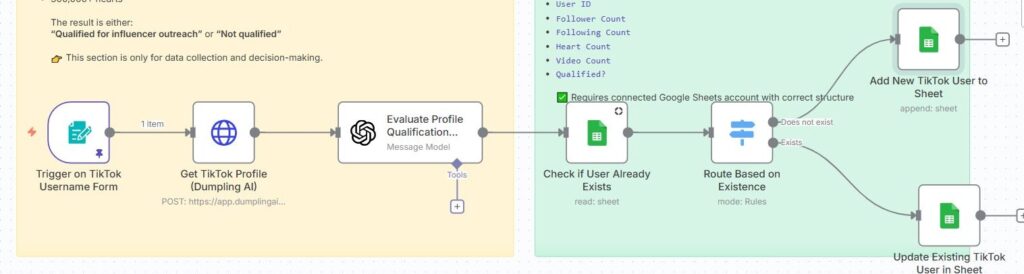
This automation qualifies TikTok users as potential influencers based on their content volume, follower count, and total likes (hearts). By simply entering a username, the workflow uses Dumpling AI to fetch profile data, applies GPT-4 to evaluate influencer criteria, and then updates or inserts the results into a Google Sheet.
Key Benefits
- Automate influencer vetting: Instantly qualify TikTok users without manual research.
- Maintain a structured influencer database: All qualified and unqualified users are stored and updated automatically in Google Sheets.
- Save time on outreach: Quickly filter creators who meet engagement and content benchmarks.
- Ideal for influencer marketers, agencies, and brand teams who manage large outreach campaigns.
Step 1: Trigger the Workflow via Form
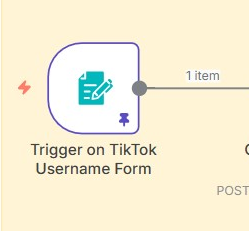
The process begins with a Form Trigger Node where you input a TikTok username. Once submitted, this triggers the entire automation flow.
Why this matters: This makes the workflow simple for anyone on your team to use. They don’t need to log into TikTok manually; just enter the username.
Step 2: Get TikTok Profile Data with Dumpling AI
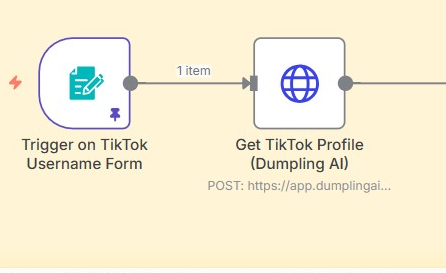
The HTTP Request Node connects to the Dumpling AI API to fetch the TikTok user’s full profile information. This includes:
- Username
- User ID
- Follower count
- Following count
- Total likes (hearts)
- Video count
Configuration details:
- Method: POST
- URL: https://app.dumplingai.com/api/v1/get-tiktok-profile
- Body: { “handle”: “{{ Tik Tok Username }}” }
Why this matters: This step gathers accurate profile metrics that GPT-4 will use to decide if the user qualifies as an influencer.
Step 3: Evaluate Influencer Qualification with GPT-4
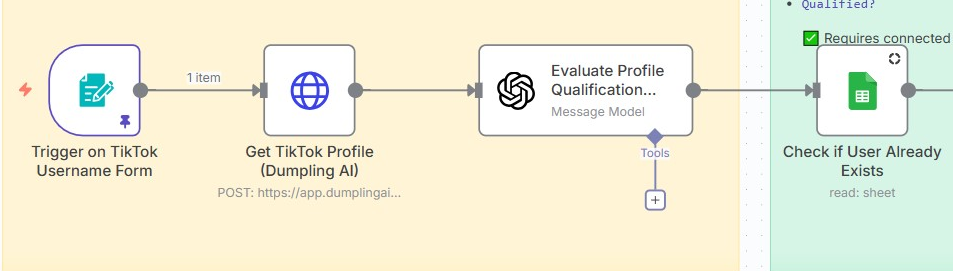
An OpenAI Node running GPT-4 checks the fetched profile data against preset criteria:
- At least 40 videos
- At least 100,000 followers
- More than 300,000 total hearts
GPT-4 then returns a clear result:
- “Qualified for influencer outreach” if all criteria are met
- “Not qualified” if any criterion fails
Why this matters: GPT-4 acts as an intelligent evaluator, saving you from manually checking each profile.

Step 4: Check Google Sheet for Existing Record
The Google Sheets Node searches the influencer sheet to see if the user already exists, using the User ID as the lookup value.
Why this matters: This prevents duplicate entries and ensures that your influencer list stays clean and organized.
Step 5: Route Based on Existence
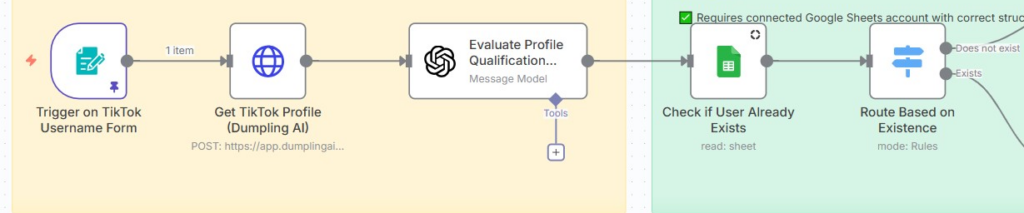
A Switch Node routes the workflow based on whether the user already exists in the Google Sheet:
- If the user does not exist → they are treated as a new entry.
- If the user does exist → their information is updated.
Why this matters: This step ensures your influencer sheet is always accurate and up to date.
Step 6: Add New TikTok User to Google Sheet
If the user is new, the Google Sheets Node appends a fresh row containing:
- TikTok username
- User ID
- Follower count
- Following count
- Heart count
- Video count
- Qualification status from GPT-4
Why this matters: All new influencer prospects are logged automatically without manual data entry.
Step 7: Update Existing TikTok User in Google Sheet
If the user already exists, the workflow uses the appendOrUpdate operation to refresh their metrics and qualification status in the sheet.
Why this matters: Influencer stats change over time. This ensures your data stays current, allowing for better outreach decisions.
Tools and Accounts Needed
- Dumpling AI API for TikTok profile data
- OpenAI GPT-4 API for qualification logic
- Google Sheets for storing and updating influencer records
Conclusion
This workflow streamlines the TikTok influencer qualification process from start to finish. Instead of manually checking each profile and updating spreadsheets, you can now:
- Enter a username
- Instantly evaluate influencer status
- Automatically update your influencer database
Perfect Use Cases
- Influencer marketing agencies qualifying creators at scale
- Brands identifying ideal partners for campaigns
- Content teams building outreach lists based on performance benchmarks
With this setup, you’ll save hours every week and make data-driven influencer decisions quickly and confidently.
Download the blueprint used in this blog post
Click here to access the blueprint.


